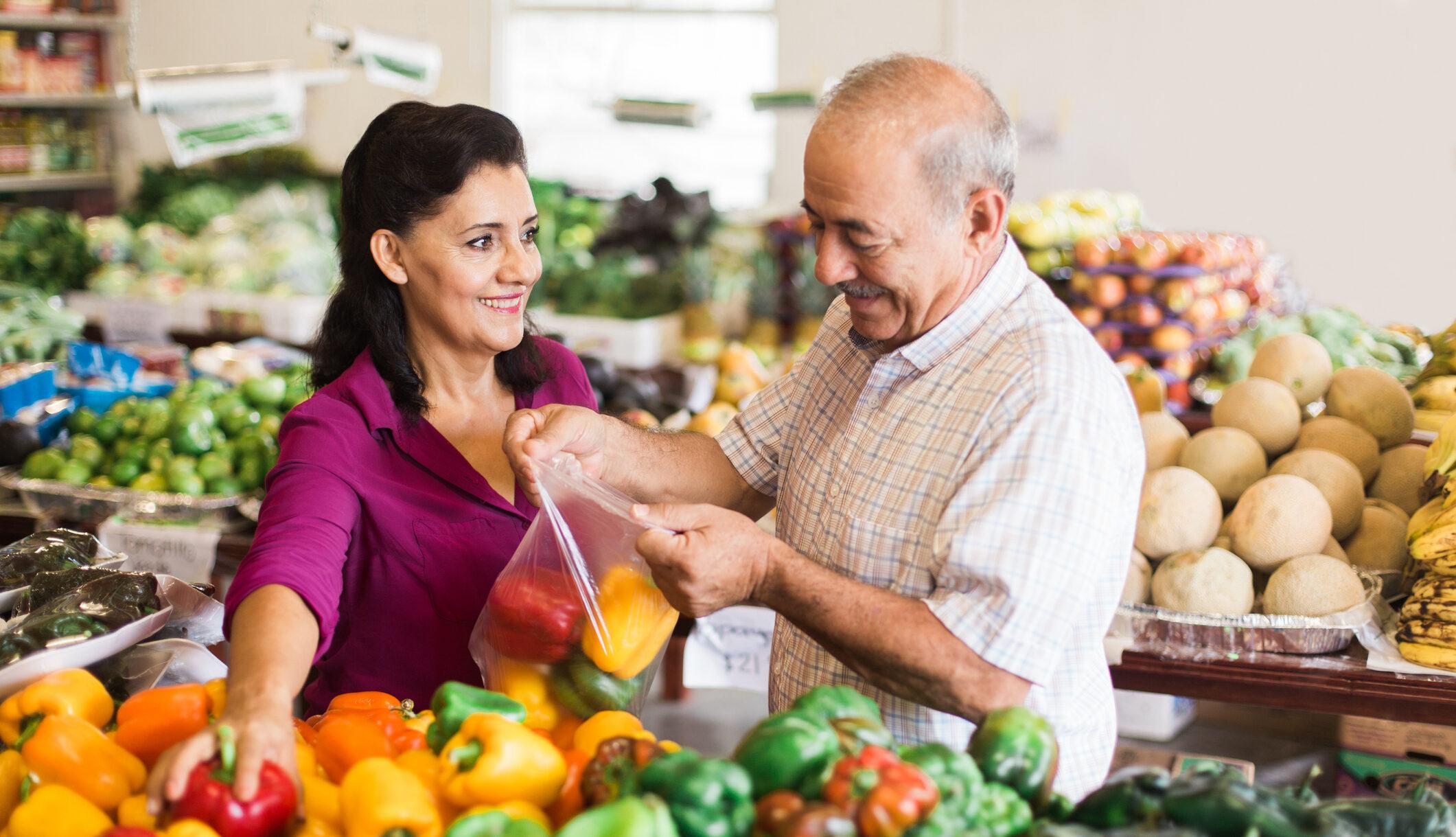

Last year we initiated our first ever holding in Mexico, Banorte. Short-term concerns around Mexican politics gave us the opportunity to add another. Walmart Mexico (Walmex) is the country’s largest retailer.
We still see Mexico as a very attractive emerging market. It has improved corporate-level governance, something many other emerging markets lack. Although there are concerns about radical constitutional changes after the recent election, we expect that things will return to business as usual. To avoid shooting herself in the foot, the incoming president will need to be pragmatic. If the past is any precedent, changes are likely to be watered down and fade into history. Negative news is short-term in nature and amplified by the media, whereas positive developments occur more slowly but powerfully in the background.
There remain many trends that are in Mexico’s favour. It is easy to forget that 2020 saw a landmark change when the NAFTA alliance was upgraded to the USMCA, a free trade zone of 510m people and covering 30% of world GDP. Mexico will continue to be a beneficiary of nearshoring over the coming years. Consumer confidence levels are near a 10-year high, partly helped by a doubling of the minimum wage over the last five years (although it remains low at around $15 for an 8-hour workday across most of the country)1. At the same time, remittance payments from the US are steadily increasing.
With this backdrop we had a closer look at the Mexican retail market and were drawn to Walmex. The company is majority owned by Walmart and has around 34% market share of the modern grocery retail market. Food and other staples account for around 2/3 of sales, with the remainder consisting mainly of general merchandise and apparel. The company has just under 4,000 stores - 3,015 in Mexico and 900 across the rest of Central America.
Under the outgoing CEO (2016-2024), the company saw tremendous growth. The target was to double sales in 10 years, but Walmex achieved this in just 9 years, consistently outperforming the overall Mexican modern retail market. During that time, operating margins increased from 7.9% to 8.3% and return on invested capital from 14.7% to 20.7%. The new target is to double sales growth again, but in a shorter time frame than the last time. This would translate into an average sales growth of 9% p.a. over the next 8 years2.
We believe the targets are achievable. Although discounters are on the rise in Mexico, Walmex can compete on price across its different store formats. This is helped by a growing assortment of private label products, the shared scale with the Walmart group and a close relationship with suppliers.
Walmex has seven different store formats across the low and mid income customer brackets. This offers shoppers at informal street markets (still around 40% of overall Mexican food spending) to trade up to the formal market. It also offers an attractive price / value proposition to the growing Mexican middle class. Additionally, online shopping and a greater assortment of goods is increasing the customer reach.
Walmex is following its US parent company in offering adjacent services and products. These include amongst others, telecom services, a digital wallet and healthcare services. On their own these offerings are not contributing meaningfully to sales despite very strong growth rates. However, they increase customer stickiness and loyalty, which in turn is reflected in the continued outperformance against the peer group in terms of same store sales growth.
The shares have been depressed since the recent election. We believe earnings per share growth should be at least double digits for the next 5 years, while the valuation currently sits at 17x the current earnings per share, a 10-year low3. For most of its history, Walmex traded at a premium to its parent Walmart, but the latter is now on 30x earnings per share. We took advantage of this unusual summer sale and initiated a new holding.
As with Mexico, the dispersion in equity markets has also thrown up other interesting investment opportunities including ArcelorMittal, another new holding. As an investment, Arcelor is entering the final stage of a pattern we like:
Step 1: Survive a tough downturn and build a strong balance sheet.
Step 2: Transform by selling low margin businesses, structurally improving efficiency, and prioritising value over volume.
Step 3: Generate substantial cash flow and supercharge dividends with share buybacks.
Often being out of favour forces transformation. The changes affecting the steel industry include energy costs, decarbonisation, and intense competition from China. While some might view these as threats, we see them as opportunities. Consolidation is inevitable, the strong will get stronger, and Arcelor is carving out a global leadership position.
Diversified, a cost leader and vertically integrated, it is perfectly placed to focus on higher grade, higher value steel. It can also balance investments into modernisation and decarbonisation, at the same time as returning excess cash to shareholders.
Still viewed as a leveraged European blast furnace operator, Arcelor’s balance sheet is unrecognisable from ten years ago, as are the mix of operations. Today, Europe represents just above 20% of its underlying operating profits including associates and joint ventures. It is well advanced in terms of plans to upgrade its steelmaking processes. It is set to grow in India, Brazil, and North America, yet its valuation had become completely disconnected from those of other steel companies in those regions. Apparent steel use in India has grown from around 60kg per capita ten years ago to just over 90kg today - but remains short of Brazil at 110kg, let alone Germany (337kg), the U.S. (226kg) or Japan (432kg)4.
Arcelor has an entrepreneurial and driven family managing the company, and they have made a series of astute acquisitions and divestments. Conditions in the industry have been and are tough, but the company has managed to buy back 36% of its shares over the past four years. Looking to the future, we believe we are about to enter another cycle of high cash returns, even with depressed prices. Further buybacks at low valuations would be a potent combination and could well leave the earnings per share multiple in the low single digits. The book value of the business is close to $60bn, while the market value is only $20bn5.
1 Source: Statista
2 Walmex
3 Source: Bloomberg
4 Source: World Steel Association
5 Source: Bloomberg
KEY RISKS
The value of investments and any income generated may go down as well as up in response to general market conditions and the performance of the assets held, and is not guaranteed. An investor may not get back the amount originally invested.
Past performance is not a reliable guide to future results.
Changes in exchange rates may have an adverse effect on the value, price or income of investments.
There is no guarantee that the Fund will meet its stated objectives.
There is a risk that any company providing services such as safe keeping of assets or acting as counterparty to derivatives may become insolvent, which may cause losses to the Fund.
Interested in finding a new source of growth and income? Click here to find out more and to view our latest webinar.
For Professional Investors only.
Capital at risk.