ArticleInsight

Can American manufacturing be great again?

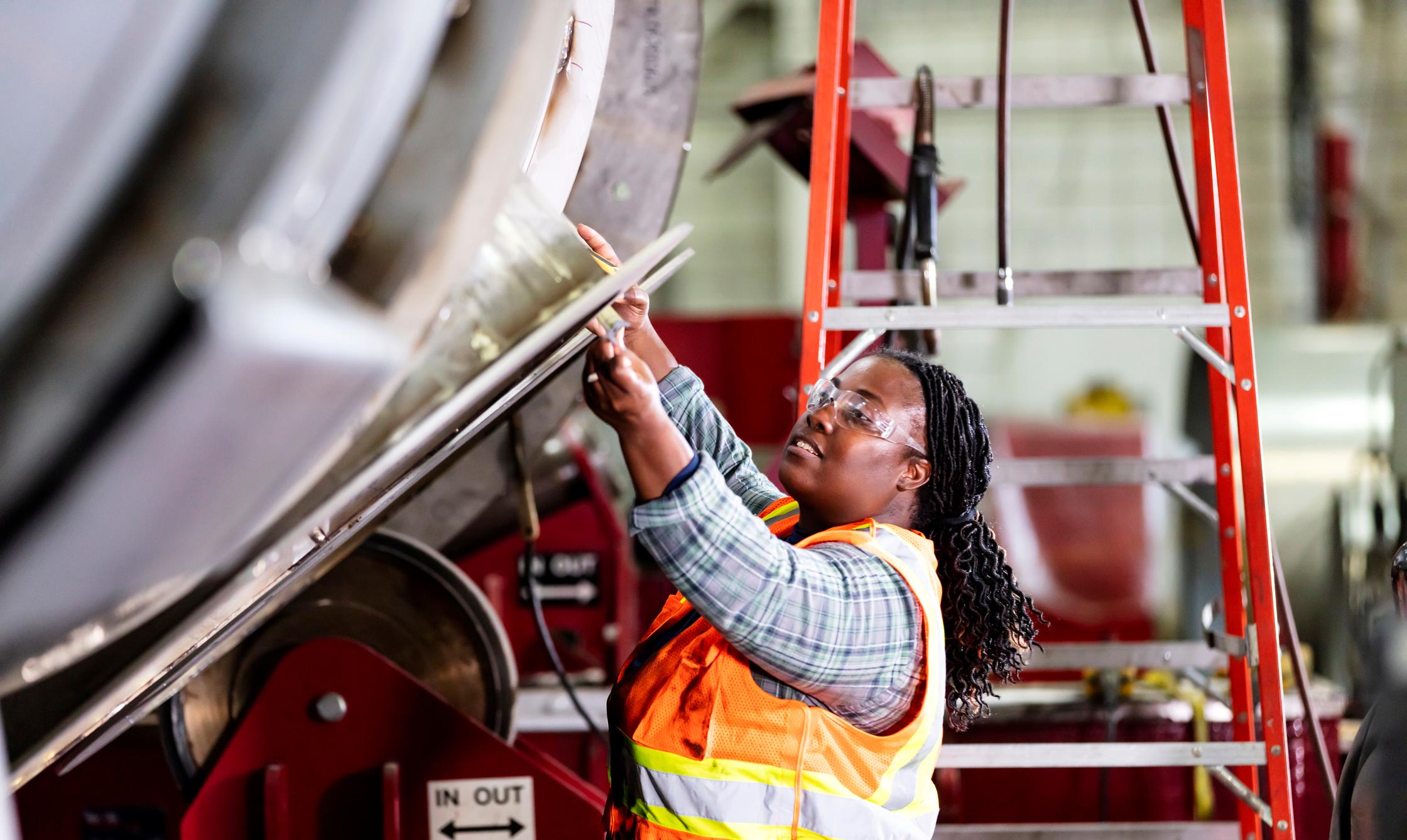
Speak to any manager of an industrial manufacturing business and they will probably tell you that making things is hard - and getting harder. Depending on where you are, the reasons might include high energy prices, struggling supply chains, unfair competition, a lack of skilled labour, and now to top it all off, tariff uncertainty. The closure of industrial capacity is not new, but as the pressures have grown governments are struggling with the fallout. Manufacturing jobs used to form the heart of the middle class and losing them can leave economies vulnerable, worsen income inequality and hurt national pride. It quickly becomes political.

It was no surprise then that in April, the White House published a fact sheet1 saying that President Trump “recognizes that increasing domestic manufacturing is critical to U.S. national security”. The note also pointed out that from 1997 to 2024, the U.S. lost around 5 million manufacturing jobs and experienced “one of the largest drops in manufacturing employment in history”. In the UK, where just under 2 million manufacturing jobs have been lost over the same period, we await the details of a new “industrial strategy” plan shortly2, 3.

It all sounds worrying, but is it the whole picture?


The peak of U.S. manufacturing employment was in 1979 at a level of just under 20 million, falling to a post-recession low of just over 11 million in 2010. But since then the figure has grown. Spending on a leading indicator - manufacturing facilities, tripled between 2020 and 2024, with projections for 3.8m additional manufacturing jobs coming between now and 20334.

Sometimes these changes can be hard to relate to, but the latest holding for the fund is an $8.5bn market capitalisation manufacturing company that has doubled its employee count over the last 30 years. Mueller Industries is an American maker of various metal products, mostly made from copper. Founded by a German immigrant in 1917 in Mid-West America, a British observer might at first glance call it a “metal basher”. We don’t, and not only because we would hate to offend the company(!), but because it sells short what they do and just as importantly how well they do it.

Most of what Mueller makes are high volume products that could be described as commodities, such as the copper piping used in plumbing. Despite being an industry leader, it has had to face limited housebuilding, low-cost product from Asia and growth in cheaper alternatives such as plastic. There had been limited tailwinds to pre-tax profits since 2000.


It looks like something suddenly changed in 2020. Of course, COVID provided pricing power to anyone able to deliver what was in short supply - but what is more revealing is that since then profits have stayed high. COVID amplified other changes that had already taken place. These included the exit of other smaller competitors, the imposing of anti-dumping fines on most import locations and Mueller’s continued investments into modernised, scaled and automated plant and equipment. When customers were left short of available product, margins expanded.

After some extensive research we believe Mueller’s newfound level of profitability is unlikely to decline any time soon. If you think operating margins of around 20% for an industrial good are too high, try buying an electrical transformer or residential lock! Not only have the costs of the required investment to compete gone up but producing the required range of specifications at a consistent quality, and then getting them into smaller distributors across America, would take many years to achieve.

Surviving and now thriving as a more than 100-year-old company is no ordinary feat, and Mueller has some unusual characteristics for a modern U.S. company. These include: a net cash balance of more than $1bn, a CEO/Chairman who has been with the company for more than 30 years, no investor relations department or earnings calls, and one sell-side analyst covering the company.

With its established market position, management and balance sheet, there was one final piece that we needed to fill our puzzle – how much cash can Mueller generate and what will they do with it?

Here, the first clue came from a February press release5, where the Board of Directors declared a 25 percent increase in the quarterly cash dividend. This was the fifth year of double-digit increase. The second came from going back in time and finding that when it built up enough reserves, the company was also able to pay two large special dividends. While Mueller continues spending on upgrading its facilities, this is mostly done, and so it has started to spend money widening its scope through acquisitions. The latest addition was Nehring Electrical Works, one of few remaining U.S. producers of quality wiring. If Mueller can translate even part of their success into other growing end markets, the future is bright.

When thinking about cumulative cash flows over five to ten years, sometimes a price to earnings ratio can overstate the potential and sometimes it can understate it. While already much lower than the global and U.S. averages of just over 18x and 20x forward respectively6, Mueller’s forward P/E of 13x6 is we would argue overstated, and not reflective of the value of the business. While any improvement in volumes from more U.S. activity would be most welcome, in the case of Mueller, there is no need to make things great again - they already are!


1 Fact Sheet: President Donald J. Trump Declares National Emergency to Increase our Competitive Edge, Protect our Sovereignty, and Strengthen our National and Economic Security – The White House

2 UK Workforce Jobs SA : C Manufacturing (thousands) - Office for National Statistics

3 UK industrial strategy launch pushed back to end of June

4 Supporting US manufacturing growth | Deloitte Insights

5 Mueller Industries, Inc. Announces 25 Percent Increase in Quarterly Dividend :: Mueller Industries, Inc. (MLI)

6 Source: Bloomberg


KEY RISKS

The value of investments and any income generated may go down as well as up in response to general market conditions and the performance of the assets held, and is not guaranteed. An investor may not get back the amount originally invested.

Past performance is not a reliable guide to future results.

Changes in exchange rates may have an adverse effect on the value, price or income of investments.

There is no guarantee that the Fund will meet its stated objectives.

There is a risk that any company providing services such as safe keeping of assets or acting as counterparty to derivatives may become insolvent, which may cause losses to the Fund.


For professional investors only.

Capital at risk.


For more information about the fund and how the fund is positioned, please visit our fund centre below:

RGI Global Income and Growth Fund

The focus of the fund is to invest in leading global businesses offering lower risk and modest share valuations. We conduct proprietary research focusing on businesses’ long-term earnings potential, including ‘worst-case’ scenario modelling. The outcome is a differentiated, conviction portfolio with a high active share.

Visit Fund

For professional investors only.

This article has been prepared by River Global Investors LLP (“RGI”). RGI is authorised and regulated in the United Kingdom by the Financial Conduct Authority (Firm Reference No. 453087) and is registered in England (Company No. OC317647), with its registered office at 30 Coleman Street, London EC2R 5AL.

For further information on the sub-funds of the RGI Funds ICVC, including specific risks and risk profiles please refer to the Prospectuses and the Key Investor Information Documents (KIIDs) (available on river.global).

This article is intended for use by individuals who are familiar with investment terminology. Please contact your financial adviser if you need an explanation of the terms used.

The value of investments and any income generated may go down as well as up and is not guaranteed. An investor may not get back the amount originally invested. Past performance is not a reliable guide to future results. Changes in exchange rates may have an adverse effect on the value, price or income of investments. This article does not constitute an investment recommendation and should not be used as the basis for any investment decision. Opinions, estimates and projections in this article constitute the current judgement of the author as of the date of this article.

For professional investors only.

This document has been prepared by River Global Investors LLP (“RGI”). RGI is authorised and regulated in the United Kingdom by the Financial Conduct Authority (Firm Reference No. 453087) and is registered in England (Company No. OC317647), with its registered office at 30 Coleman Street, London EC2R 5AL. The value of investments and any income generated may go down as well as up and is not guaranteed. An investor may not get back the amount originally invested. Past performance is not a reliable guide to future results. Changes in exchange rates may have an adverse effect on the value, price or income of investments. This article does not constitute an investment recommendation and should not be used as the basis for any investment decision. Opinions, estimates and projections in this article constitute the current judgement of the author as of the date of this article. Please note that individual securities named in this article may be held by the Portfolio Manager or persons closely associated with them and/or other members of the Investment Team personally for their own accounts. The interests of clients are protected by operation of a conflicts of interest policy and associated systems and controls which prevent personal dealing in situations which would lead to any detriment to a client.